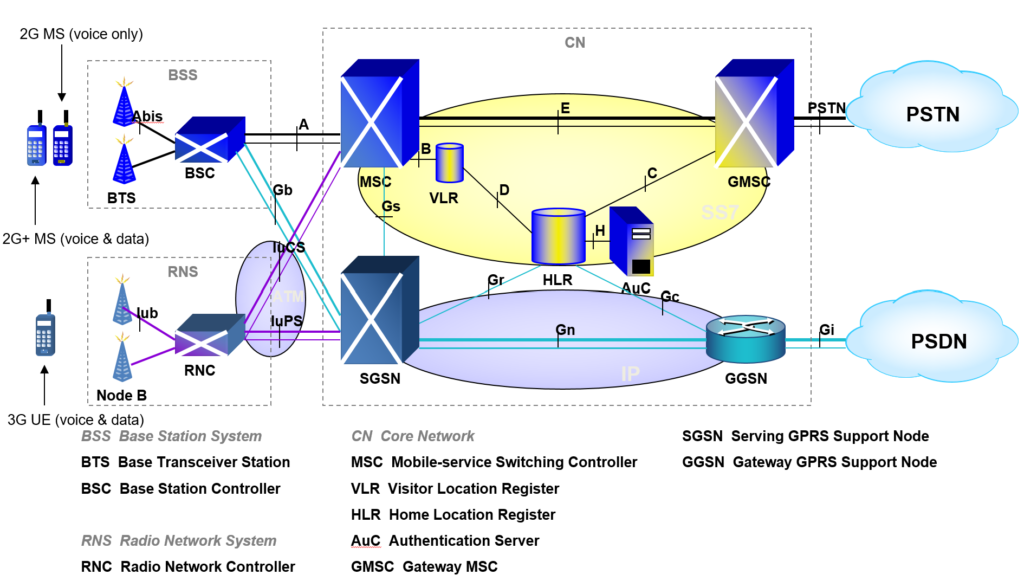
3G Release-99 Architecture (UMTS)
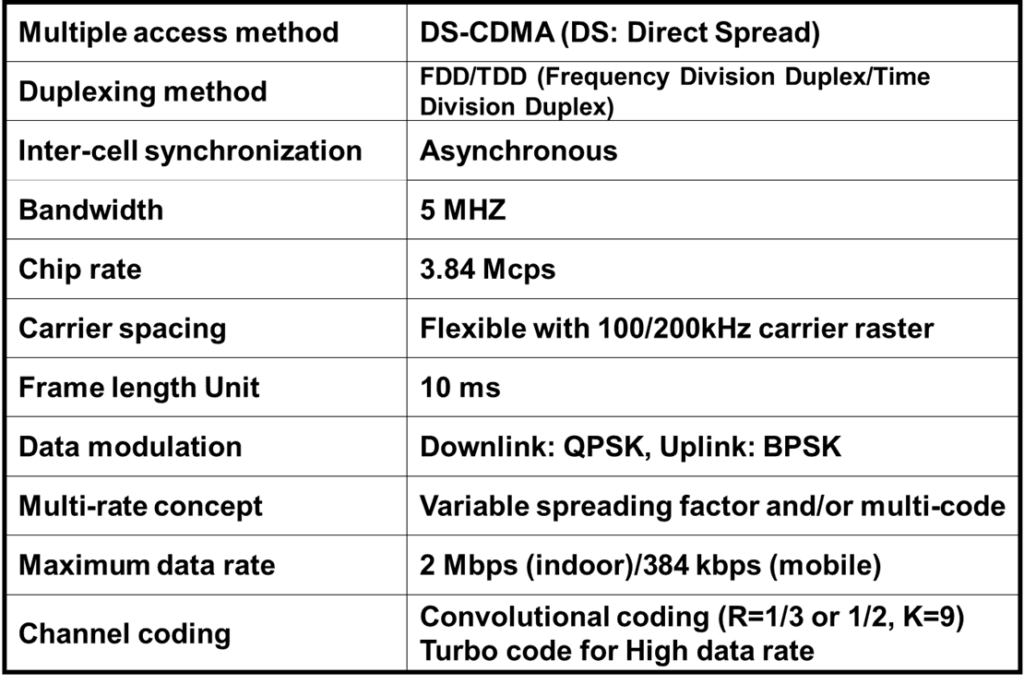
WCDMA Specification
Spreading process in WCDMA
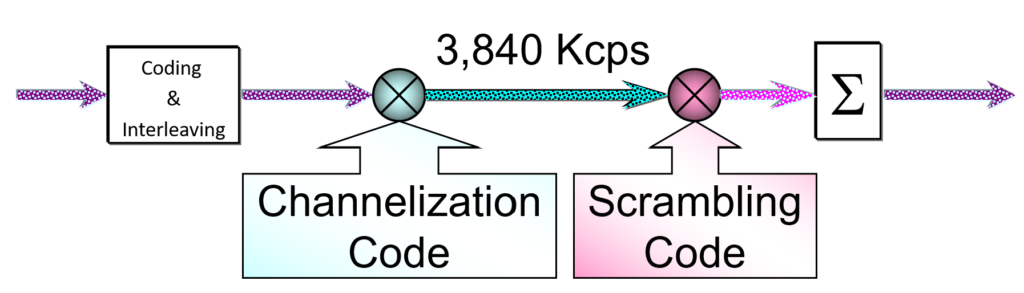
1st Step: Channelization
Variable Rate Spreading ( According to user data rate)
2nd Step: Scrambling Code
Fixed Rate Spreading (3,840 Kchips)
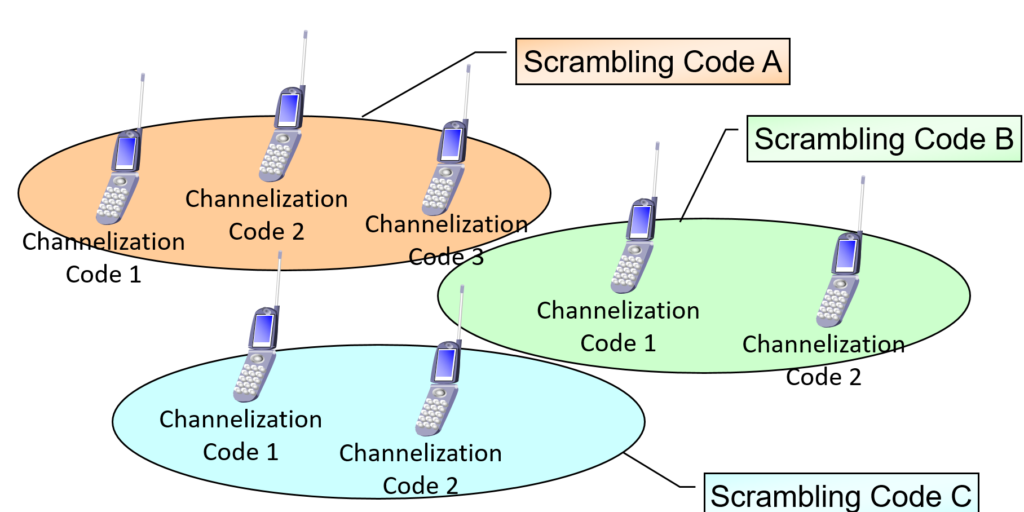
Spreading process in WCDMA
Scrambling Code: Identifies cell (sector).
Channelization Code: Identifies user channels in cell (Sector).
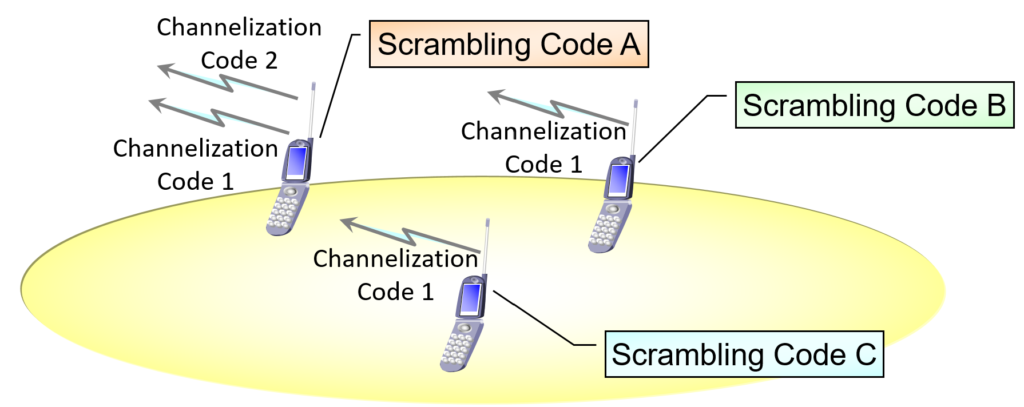
Up Link (UE to NodeB )
Scrambling Code: Identifies user terminal.
Channelization Code: Identifies channels in user terminal.
Orthogonal Variable Spreading Factor [OVSF] codes are the channelization codes used for signal spreading in the uplink and downlink
![Orthogonal Variable Spreading Factor [OVSF] codes](https://paktechpoint.com/wp-content/uploads/2025/12/image-5-1024x446.png)
•The code used for scrambling of the uplink Channels may be of either long or short type, There are 224 long and 224 short uplink scrambling codes. Uplink scrambling codes are assigned by higher layers.
•For downlink physical channels, a total of 218-1 = 262,143 scrambling codes can be generated. Only scrambling codes k = 0, 1, …, 8191 are used.
•In the downlink direction 512 of scrambling codes are used to identify the cells in the downlink so downlink planning is required.
Different Handover in 3G
1.Intra-system handovers
- MS handover within one cell between different sectors: Softer handover
- MS handover between different BS:
- Soft handover
- Hard handover
2.Inter-frequency handovers
Hard handover
3.Inter-system handovers
Handover between WCDMA <–> GSM900/1800: Hard handover
Handover between WCDMA/FDD <–> TDD: Hard handover.
Intra-system handovers
1.Intra-system handovers
I.Softer handover
II.Soft handover
III.Hard handover
Softer Handover
•Softer handover refers to handover between cells with same frequency and in same nodeB.
As we can say HO between Cell A to Cell B of SITE0001 at f1 or f2
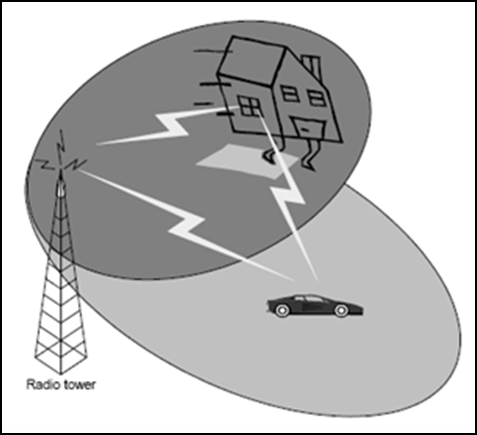
Soft Handover
•Soft handover refers to adding a new serving cell and deleting the old one after stabilization. Services continue in the handover without any interruption. It’s also known by term make before break.
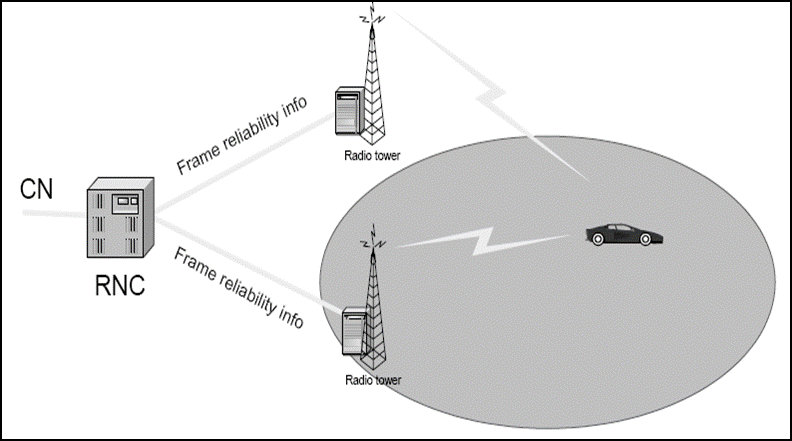
Hard Handover
•Hard handover refers to deleting the old serving cell and then adding a new serving cell. Services break off during the handover. It’s also known by term break before make.
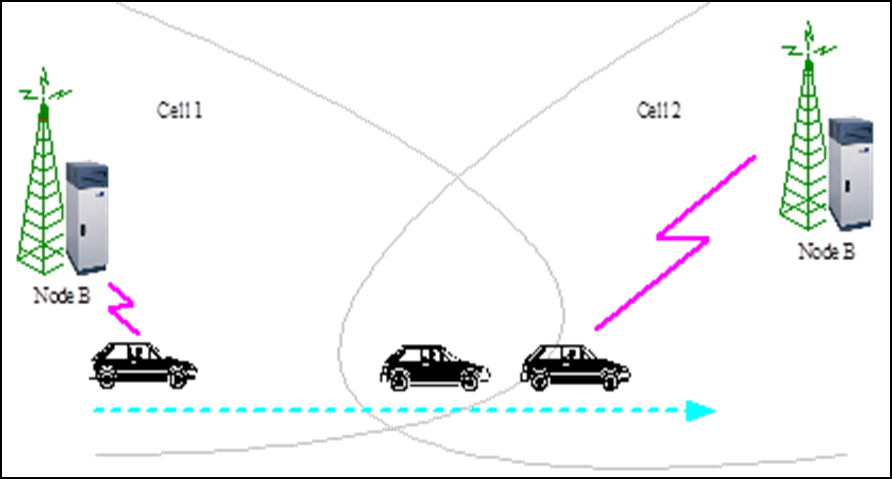
Events in 3G
Below events are correlative to soft handover
| Event | Description |
| Event 1A | Quality of target cell improves, entering a report range of relatively activating set quality |
| Event 1B | Quality of target cell decreases, depart from a report range of relatively activating set quality |
| Event 1C | The quality of a non-activated set cell is better than that of a certain activated set cell |
| Event 1D | Best cell generates change |
| Event 1E | Quality of target cell improves, better than an absolute threshold |
| Event 1F | Quality of target cell decreases, worse than an absolute threshold |
Below are events correlative to hard handover
| Event | Description |
| Event 2A | Best band generates change |
| Event 2B | Quality of currently-used band is worse than an absolute threshold and that of non-used band is better than an absolute threshold |
| Event 2C | Quality of non-used band is better than an absolute threshold |
| Event 2D | Quality of currently-used band is worse than an absolute threshold |
| Event 2E | Quality of non-used band is worse than an absolute threshold |
| Event 2F | Quality of currently-used band is better than an absolute threshold |
Event correlative to handover between systems
Common Pilot Channel (CPICH)
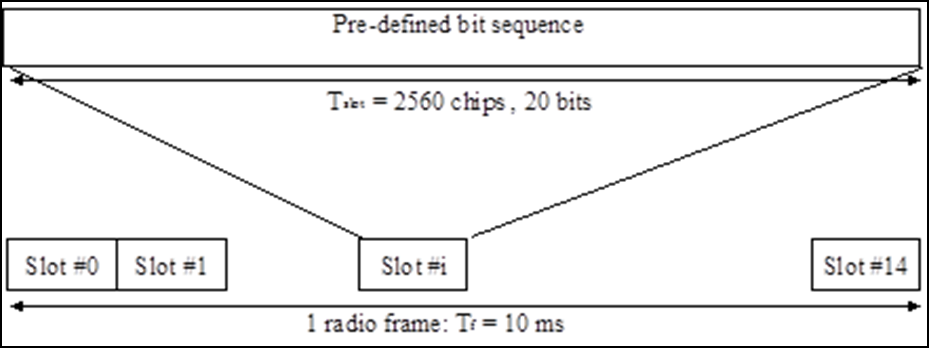
Primary CPICH
•An important area for the primary common pilot channel is the measurements for the handover and cell selection/reselection. The use of CPICH reception level at the terminal for handover measurements has the consequence that, by adjusting the CPICH power level, the cell load can be balanced between different cells. Reducing the CPICH power causes part of the terminals to hand over to other cells, while increasing it invites more terminals to hand over to the cell, as well as to make their initial access to the network in that cell.
•The Primary Common Pilot Channel (P-CPICH) has the following characteristics:
- The same channelization code is always used for the P-CPICH.
- The P-CPICH is scrambled by the primary scrambling code.
- There is one and only one P-CPICH per cell.
- The P-CPICH is broadcast over the entire cell.
Secondary CPICH
- Secondary CPICH may be phase reference for the secondary CCPCH.
- A Secondary Common Pilot Channel (S-CPICH) has the following characteristics:
- An arbitrary channelization code of SF=256 is used for the S-CPICH.
- A S-CPICH is scrambled by either the primary or a secondary scrambling code.
- There may be zero, one, or several S-CPICH per cell.
- A S-CPICH may be transmitted over the entire cell or only over a part of the cell.
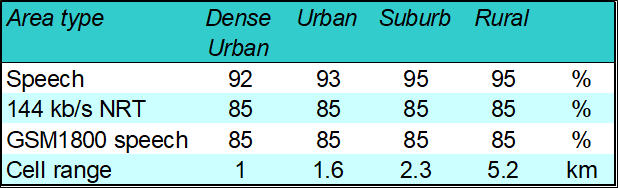
WCDMA Cell Coverage
Factors affecting cell size include:
Frequency band – 2000MHz much higher than GSM networks.
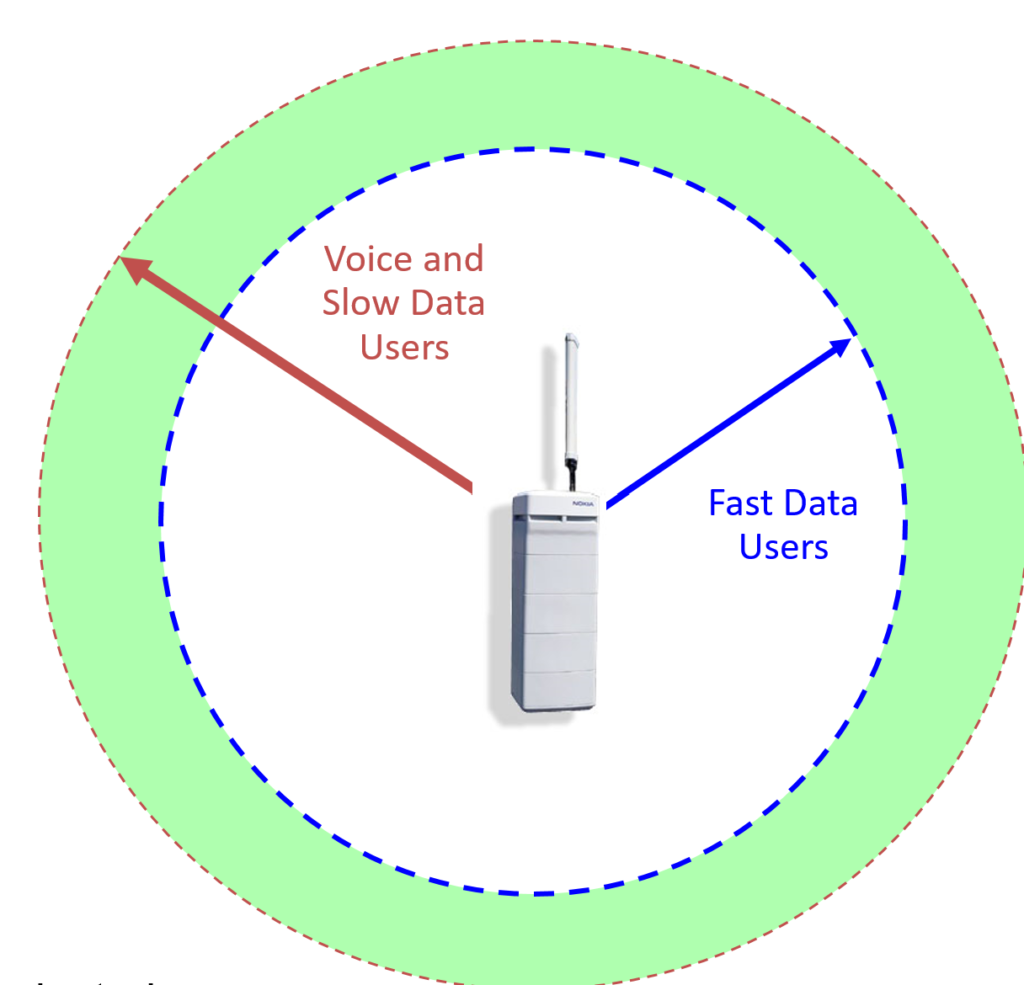
Traffic types – WCDMA user data rates drop off as the user moves further away from the Node B
User levels – Demand for mobile services will increase, leading to much greater user densities