Piping components are the lifelines of industrial processes, transporting fluids and gases under a range of conditions. Ensuring their durability and reliability is paramount…
Corrosion is a pervasive challenge in the oil and gas industry, particularly in high-temperature environments where hydrogen-free sulfidation corrosion can wreak havoc on equipment…
High-temperature hydrogen services pose unique challenges to industrial systems, demanding meticulous materials selection and stringent operational practices. Module C of API RP 941, the…
Dissolved Gas Analysis (DGA) is a diagnostic technique used in various industries, primarily in the electrical power and oil industries, to assess the condition…
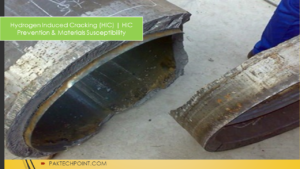
Hydrogen-induced cracking, often referred to as hydrogen embrittlement, is a chemical phenomenon that leads to the fracture of metal alloys. This unique mode of…
This article is about piping material selection guide pdf, Material selection for piping systems pdf, pipe material selection for water supply, piping material technical specification, piping materials for oil and gas…
The SAES-L-131 standard outlines supplementary fracture toughness requirements for controlling crack propagation at temperatures above 0°C in carbon steel line pipes used for off-plot…
In everyday language, the terms “bevel” and “chamfer” are often used interchangeably, although there are subtle technical distinctions. A chamfer typically refers to a…
The SAES-L-125 standard provides guidelines and requirements for the preparation of Safety Instruction Sheets (SIS) for piping systems in new and existing plants. These…
SAES-L-120 is a standard that provides design requirements for the flexibility analysis of piping systems. Here are the key points from the description you…
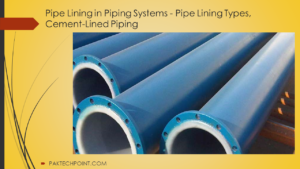
Lined piping or Pipe Lining, including cement-lined piping, is a vital component of many piping systems, particularly in situations where protection against corrosion is…