Cathodic protection (CP) is a method used to control the corrosion of a metal surface by making it the cathode of an electrochemical cell. A simple method of protection connects the metal to be protected to a more easily corroded “sacrificial metal” to act as the anode.
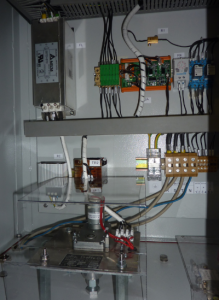
CATHODIC PROTECTION POWER SOURCES Cathodic Protection Transformer rectifier stations Generally there are different types of transformer rectifiers. Oil cooled transformer/rectifiers Air-cooled transformer/rectifiers Switching mode…
ELECTRICAL EARTHING OF CATHODIC PROTECTION The object under cathodic protection should be electrically isolated from common or plant earthing systems to avoid a loss…
Isolating couplings or flanges for pipelines need to be suitable for the operating conditions encountered on the particular installation, e.g. pressure and temperature, and…
Installation in soil Soil anodes are usually pre-packaged in backfill (gypsum/bentonite) in cotton bags. Pre-packaged anodes should be kept dry during storage. If individually…
Junction boxes, distribution boxes and test posts Junction boxes and distribution boxes shall be installed at suitable levels so as to prevent any ingress…
Underground cables Cathodic protection cables shall be handled and laid with extreme care as damage to the insulation and/or sheathing may result in premature…
Main keywords for this article are Impressed Current Ground Beds, Anode Cable Installation, Surface groundbeds, Deepwell groundbeds, Underwater anodes. IMPRESSED CURRENT GROUND BEDS The…
INSTALLATION CHECKLIST FOR TRANSFORMER RECTIFIER STATIONS Procedure Activity / Property Result / Check Unit Check that the installation has been de-energised AC side…
SAUDI ARAMCO ENGINEERING STANDARD FOR ELECTRICAL SYSTEM 1. SAES-P-100 – Basic Power System Design Criteria 2. SAES-P-101- Regulated Vendors List for Electrical Equipment 3.…
ELECTRICAL INSTRUMENTATION AND CATHODIC PROTECTION DEFINITIONS 1. ANSI – American National Standard Institute 2. ASTM – American Standard for Testing & Materials 3.…